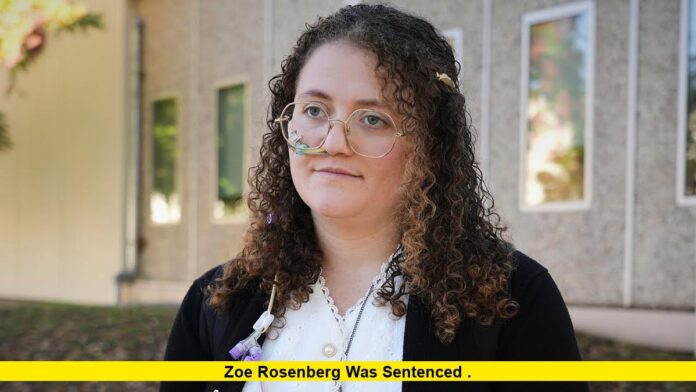
Animal rights activist Zoe Rosenberg was sentenced this week to serve 90 days in jail, including 60 days in an alternative program such as home confinement, after a Sonoma County court found her guilty of felony conspiracy and multiple misdemeanors for removing four chickens from a poultry plant. The case, closely followed by animal welfare supporters and legal observers alike, underscores deep tensions over activism, animal rights, and the boundaries of civil disobedience.
Table of Contents
Court Verdict and Sentencing
In late October 2025, a jury in Santa Rosa, California found 23-year-old Rosenberg guilty of felony conspiracy, two counts of trespassing, and a vehicle-tampering misdemeanor for taking four chickens from the Perdue Farms subsidiary Petaluma Poultry in June 2023. The activists had removed the birds — later named Poppy, Ivy, Aster, and Azalea — claiming the animals were sick and suffering and needed rescue.
At sentencing on December 3, the court ordered 90 days behind bars, although 60 of those may be served via alternatives like home confinement. In addition, Rosenberg received two years of probation, a restriction barring her from any Perdue-owned properties in Sonoma County, and a restitution payment of approximately $102,548.09 to Petaluma Poultry — which the company said will be donated to a local food bank.
What Rosenberg and Supporters Say — and What Prosecutors Argued
Rosenberg, a member of the animal-rights group Direct Action Everywhere (DxE), maintained she acted out of compassion. She said she believed the chickens were in dire condition and “rescued” them from potential suffering, not to enrich herself. The sanctuary to which the birds were taken confirmed they are alive and being cared for.
Her attorney criticized the prosecution for using extensive public resources to penalize the extraction of a few low-value animals — arguing the real issue was alleged cruelty at the facility rather than Rosenberg’s removal of the chickens.
Prosecutors countered that Roeenberg’s actions disrupted legitimate business operations, posed biosecurity risks, and involved illegal intrusion, regardless of her motivations. The court rejected the “necessity defense,” meaning the jury did not consider her claim that removing the birds was necessary to prevent their suffering.
Larger Context: Activism, Factory Farming, and Legal Precedent
The case highlights growing friction between animal-rights activists and large agricultural operations — especially over so-called “open rescues,” in which activists take animals from farms without permission. DxE, the group Rosenberg belongs to, has used such tactics to draw attention to what it describes as inhumane conditions in factory farms.
Among critics, there is concern that such actions compromise biosecurity, disrupt operations, and violate property law — while supporters argue that these rescues shine a light on cruelty and force corporations and regulators to act. Many observers see Rosenberg’s case as an important test of how far activism can go under U.S. law.
Similar cases involving other DxE members in Sonoma County have ended with convictions, reinforcing a trend toward strict enforcement against direct-action animal liberation tactics.
What Comes Next
Rosenberg must report to Sonoma County jail on a specified date. Her attorney has indicated plans to appeal the verdict, which could open the door for further legal debate over the rights of activists, property law, and what constitutes lawful defense of animals.
Meanwhile, the restitution payment to Petaluma Poultry — designated for redistribution to a local food bank — and the probation conditions suggest courts are aiming for both accountability and deterrence in future “rescue” cases.
What This Means for Animal Rights and Public Debate
The sentencing of Zoe Rosenberg casts a long shadow over direct-action “open rescue” efforts. For animal-welfare advocates, it marks a painful defeat — signaling that even compassionate motives may not shield activists from severe criminal consequences. For farms and agribusiness, it may strengthen the legal boundary against unauthorized entry or removal of livestock.
This outcome may discourage similar actions in the short term — but could also intensify public scrutiny of factory-farming practices and drive calls for regulatory reforms.
If you have thoughts or questions about this case — or what it means for animal rights and law — feel free to share below and stay tuned as the story unfolds.

