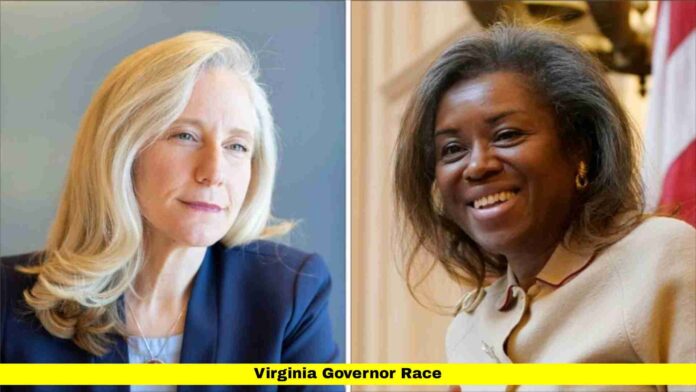
The Virginia governor race has entered its most intense phase as the 2025 election draws near. With polls showing Democrat Abigail Spanberger holding a steady lead over Republican Winsome Earle-Sears, the state’s political landscape is once again in the national spotlight. Both candidates are running dynamic campaigns that reflect the deep political divisions and shifting demographics of Virginia.
Table of Contents
Abigail Spanberger’s Strong Position in the Race
Abigail Spanberger, a three-term Democratic congresswoman from Virginia’s 7th District, has emerged as the frontrunner in this highly competitive race. Her campaign has been defined by a focus on economic stability, healthcare expansion, and protecting personal freedoms. Spanberger’s approach appeals to suburban and moderate voters, particularly in Northern Virginia, Richmond, and Hampton Roads—regions that often decide statewide elections.
Spanberger’s experience as a former CIA officer gives her credibility on issues of national security and governance. She has emphasized bipartisan cooperation, positioning herself as a leader who prioritizes practical solutions over partisanship. Her campaign slogan, “Leading with Common Sense,” captures her image as a pragmatic problem-solver.
Recent polls conducted in late October 2025 show Spanberger leading by an average of 8 points. She continues to perform strongly among women, independents, and college-educated voters. Her campaign has also outpaced Earle-Sears in fundraising, with contributions pouring in from across the state and national Democratic donors.
Winsome Earle-Sears’ Conservative Ground Game
Republican candidate Winsome Earle-Sears, the current lieutenant governor, has built her campaign around conservative principles and grassroots energy. A Marine veteran and businesswoman, Earle-Sears presents herself as a fighter for parental rights, lower taxes, and traditional values. Her energetic speeches and personal story as an immigrant from Jamaica have inspired Republican voters across the state.
Earle-Sears has made education a central theme of her campaign, promising to empower parents and reform school curricula. She argues that Virginia’s future depends on stronger family involvement and accountability in schools. On the economy, she promotes cutting taxes and reducing government regulation to attract businesses and create jobs.
Despite trailing in most polls, Earle-Sears has remained resilient. Her rallies in rural and suburban areas continue to draw large crowds, and she has received strong endorsements from national Republican figures. Her campaign strategy focuses on maximizing turnout in conservative strongholds like Southwest Virginia and the Shenandoah Valley.
Economy and Job Growth at the Center of Debate
Economic policy remains one of the most discussed issues in the Virginia governor race. Spanberger’s economic plan emphasizes long-term growth through clean energy investments, workforce development, and small business support. She has pledged to expand access to affordable housing and childcare, arguing that these are essential for a thriving economy.
Earle-Sears, on the other hand, focuses on tax cuts and deregulation to encourage business investment. She believes that lower taxes will make Virginia more competitive compared to neighboring states. Her campaign highlights the importance of reducing government spending and ensuring that taxpayers keep more of their income.
Spanberger has also proposed new initiatives for workforce training and public-private partnerships to prepare workers for the technology and manufacturing sectors. She argues that these investments will make Virginia a leader in innovation while creating sustainable jobs for future generations.
Education and Parental Rights Take the Spotlight
Education has become a defining issue in this year’s governor race. Winsome Earle-Sears has made “parental rights” a rallying cry, promising to expand school choice and give families more influence over education decisions. She has pledged to protect charter schools and oppose what she describes as “political agendas” in classrooms.
Abigail Spanberger takes a different approach, focusing on strengthening public schools and increasing teacher pay. She believes that education should remain a nonpartisan issue and has called for more investment in classroom resources, mental health services, and teacher training. Spanberger has also spoken out against book bans and restrictions on curriculum content, saying they distract from improving educational outcomes.
Both candidates agree that education will determine Virginia’s future competitiveness but disagree sharply on how to achieve progress. Voters, particularly parents, are watching closely as education continues to dominate town halls and campaign debates.
The Role of Social Issues in Shaping the Race
Social issues have become deeply intertwined with the political narrative of the Virginia governor race. Abortion rights, gun control, and healthcare access are among the most divisive topics. Spanberger has vowed to protect abortion rights under Virginia law, framing the issue as one of personal freedom and healthcare access. She argues that the government should not interfere in private medical decisions.
Earle-Sears supports a 15-week abortion restriction with exceptions for rape, incest, and the life of the mother. She promotes her stance as a balanced approach that respects both women and unborn children. This issue has energized voters on both sides, making it one of the most decisive factors in the upcoming election.
On gun policy, Spanberger supports stronger background checks and safety measures, while Earle-Sears defends Second Amendment rights. Their opposing views reflect the broader ideological divide between Democrats and Republicans in Virginia.
Polling Trends and Voter Sentiment
The latest polling averages indicate that Abigail Spanberger continues to lead Winsome Earle-Sears, but the gap could narrow as Election Day approaches. According to the Virginia Public Access Project, Spanberger’s lead is strongest in urban and suburban regions, while Earle-Sears dominates rural areas.
Voter enthusiasm is high among both Democrats and Republicans. Spanberger’s campaign is investing heavily in early voting and turnout operations in Northern Virginia and Richmond. Earle-Sears’ team is focusing on energizing church communities, veterans, and small business owners in conservative counties.
Independent analysts predict that the final result will depend on turnout among suburban moderates and young voters, who have played a growing role in recent Virginia elections.
Campaign Advertising and Fundraising Efforts
The Virginia governor race is among the most expensive in the state’s history. Spanberger has raised more than $40 million, much of it from grassroots donors. Her advertisements highlight her record of bipartisan leadership and focus on protecting freedoms and supporting working families.
Earle-Sears has raised around $28 million, with substantial backing from national Republican organizations and super PACs. Her campaign ads emphasize her personal story, faith, and commitment to restoring what she calls “Virginia’s traditional values.”
Both candidates have ramped up digital and television advertising as the election nears, targeting swing voters in suburban counties such as Loudoun, Chesterfield, and Prince William.
Regional Battlefields and Voting Dynamics
Virginia’s political geography plays a crucial role in determining the outcome. Northern Virginia remains a Democratic stronghold, with Spanberger leading comfortably in Fairfax, Arlington, and Alexandria. The Richmond metro area and Hampton Roads also lean Democratic but remain competitive.
Earle-Sears dominates in rural areas and parts of the Shenandoah Valley, where Republican loyalty runs deep. The swing counties—Henrico, Chesterfield, and Loudoun—will likely decide the final result. Spanberger’s campaign aims to win these areas by moderate margins, while Earle-Sears hopes to boost rural turnout to offset Democratic gains elsewhere.
Demographic trends also favor Spanberger, with growing diversity among suburban voters contributing to Democratic strength in recent years. However, Earle-Sears’ message of family values and economic freedom still resonates strongly among conservative and independent voters.
What the Virginia Governor Race Means for the Nation
The 2025 Virginia governor race carries national significance. Both major parties view it as a bellwether for the 2026 midterm elections. A Spanberger victory would signal continued Democratic strength in swing states, while an Earle-Sears win would energize conservatives and reshape Republican strategy ahead of 2026.
Virginia has often reflected national political sentiment. In 2021, Republican Glenn Youngkin’s victory previewed the GOP’s resurgence in the following midterms. Now, Democrats hope Spanberger’s campaign will reverse that trend and reaffirm Virginia’s status as a blue-leaning state.
Political observers note that the race could also influence national debates on abortion, education, and economic reform. The results will provide insight into voter priorities heading into a pivotal election cycle.
Conclusion
As Election Day approaches, the Virginia governor race remains a pivotal contest shaping both the state’s and the nation’s political direction. Abigail Spanberger’s consistent lead and disciplined campaign give Democrats optimism, while Winsome Earle-Sears’ energetic rallies and conservative message keep the race competitive.
Both candidates offer distinct visions for Virginia’s future—one rooted in centrist pragmatism, the other in conservative conviction. The final decision now rests with Virginians, who will determine whether their state continues its recent Democratic trajectory or embraces Republican leadership once again.
The eyes of the nation are on Virginia, and the outcome of this race will echo far beyond its borders.

